Writing
Thinking in public about what matters in organizations.
Essays, observations, and research notes on culture, systems, and the human dynamics of organizational life. Written for leaders who want to think more clearly about the organizations they are part of.
All writing

When employee stability becomes resistance
Employee resistance to change is often attributed to fear or incompetence. In reality, it frequently grows out of stability. Long-tenured staff accumulate benefits, routines, and cultural influence that make disruption costly, both personally and professionally. Over time, that stability can evolve into inertia, shaping how initiatives are received and whether transformation takes hold.

A culture-first perspective on Organization Development and Change
What if culture isn’t something to manage after the strategy is set, but the condition that determines whether change can happen at all? This article argues for a culture-first perspective in organization development and change (ODC), emphasizing how meaning, norms, and shared understanding shape the success or failure of change efforts.

Is COVID-19 the accelerator of nonprofit transformation change?
Crises don’t create transformation problems in nonprofits, instead they expose them. This essay examines why nonprofit transformation fails under pressure, and what moments of urgency reveal about culture, coordination, and systems.

Your target market is not as big as you think
Misidentifying your target market can be disastrous for your startup. Learn about the difference between the total available market (TAM) and target market (TM), and how a narrowly defined TM can improve your marketing efforts, reduce costs, and increase customer engagement and loyalty.

How to Develop a Sales Plan for Your Entrepreneurial Venture
A sales plan is direct and straightforward and focuses on how to identify and develop new customer sales opportunities as well as how do grow revenue opportunities from existing customers. If you have not developed a sales plan for your business, here is a framework to get started.

Thoughts on Entrepreneurial Education
Too many entrepreneurs are flying by choice or necessity by the seat of their pants, throwing things against the wall and hoping they will stick. What I have learned through experience and formal entrepreneurial education is there is not a magic formula that will breed successful ventures, but there is a framework for innovative leadership that will improve the chances of entrepreneurial success. And it's time to give back.

The Founder's Identity Crisis
The individual who can get a company off the ground is usually quite different than the individual who can run it well as it grows. The skills and abilities required of each are very different. A founder must take the time to learn new skills to transform from the role as a founder to the role true CEO if this is indeed the goal.

Interview: Lynda Liner on Entrepreneurial Recruiting
In my interview with executive recruiter Lynda Liner, she offers, among other things, that entrepreneurs should not rush the process in hiring those first employees, the importance of communication about the position's authority and responsibility in the hiring process, and tips for identifying a top recruiter for your firm.

Is your startup hiring?
You often have many needs, but you also have a limited payroll budget. The temptation is always to hire the most technically skilled person for the job, for the least amount of payroll. Getting the biggest bang for your buck sounds logical, but is it?

Thinking Hard and Soft
Empathy, courtesy, language proficiency, are among those skills that bring cohesiveness to the company. In the absence of tools that attempt to measure soft skills, you, like many other managers, might interview others by assessing their “ability to do the job.” In doing so, you are likely assessing only their hard skills. Rarely do you see a job description that includes, "Must work and play well with others." And if you do, how will you assess and measure that skill?

Hiring People Like You
Hiring people like you means you may be hiring people who have not just similar strengths, but also similar weaknesses. Hiring people like you will may also mean few will challenge your view of market opportunities, customer targets, or product features and benefits. People like you will tend to see the world in the same way as you. Hiring people too much like you may well restrict your long-term success in business.

Are you building the right kind of capital for your startup?
In modern economics, capital is typically defined as an asset that you can use to produce something that is economically useful to a business or an individual. The word, then, has different meaning depending upon its context. Even with these different meanings, you still might think capital is synonymous with money. And it would make sense since if you’re a founder, you are spending a lot of time raising and worrying about financial capital. But, financial capital may not be the only capital you need. Are you building the right kind of capital for your startup?

Choosing between wealth and control
Many startup founders maintain control as the primary means to achieving their goals with the business. One of those goals, of course, is solving that problem on which the company is built. However, many of the other goals are much more personal. Things like personal pride and wealth, for example, come to mind. But, being in control and building wealth are not mutually inclusive. In fact, it's hard to build wealth and maintain control at the same time.

Overcoming the Sunk Cost Fallacy: A Key to Entrepreneurial Success
If you’re an entrepreneur and you’re not familiar with the term “sunk costs,” you may have a problem. Even if we do understand it, the problem for most of us is that our forward-looking decisions become too tied to those sunk costs. We often become emotionally invested; the more we invest, the harder it becomes to divest ourselves from those costs. In these situations, objectively considering the pros and cons is difficult. Instead, we try to recoup sunk costs, making us irrational.

Why Your Small Business Needs an Accountant Year-Round
An accountant offers much more than bookkeeping and taxes. In fact, an accountant’s area of expertise often goes far beyond that of your neighborhood bookkeeper. While undoubtedly a bit more expensive than a bookkeeper, you should be able to rely on an accountant to add value to your business operations.

Beyond Short-Term Royalty Potential: Vetting Prospective Licensees for Long-Term Success
Some licensors may choose to focus primarily on new licensees who might generate higher royalty revenue for a short period, while others prefer the steady, long-term growth in royalty revenue. For the latter, a vetting process designed to create stronger alignment with a licensor's mission, vision, and long-term goals, ultimately provide greater success for the program and result in stronger, more prosperous licensing partnerships. Here are six ideas for improving the licensee vetting process.

Interview: ClassB CEO Eric Hilferding on Entrepreneurship
The following is an interview with Eric Hilferding, CEO of ClassB, a custom t-shirt manufacturer, and printer for my graduate coursework in entrepreneurship. Eric and I first met in 2005 when I was with the Boy Scouts of America. His company was one of our first licensees in a revamped licensing program. We became fast friends and I have long admired his attention to detail, his creativity, and his commitment to service.

Stop focusing on your product and start focusing on your customer
Customers are the only thing that matter to a business. It is surprising how many entrepreneurs start their business with an idea of a product or service and a detailed plan for execution of the offering, without a clear understanding of the customer. Too many entrepreneurs believe that the “thing”—the product or service—they have created will “satisfy society’s needs” without giving enough thought to understanding what society needs, values, and expects. The focus on the thing poses one of the most significant long-term barriers to success for entrepreneurs.

How to find and qualify new licensing opportunities
One of the most significant challenges for licensors is to keep the opportunity pipeline full. Regardless of the size of the licensing program, finding and qualifying prospective licensees can be a challenge. Some licensors need more opportunities to explore, while other licensors have the opportunities but do not have a defined qualification process. Unfortunately, some licensors have both challenges. To overcome those challenges a licensor might consider the following sales and business development techniques.

Fear and panic in entrepreneurship
When faced with challenging times as an entrepreneur, I hope you can find the courage to lean into to the future rather than retrench into the past. To find comfort in the gifts of wisdom, talent, and the experiences we each possess to make the best decisions for moving forward on your journey.

8 Shark Tank Takeaways for Entrepreneurs
The new season of ABC’s Shark Tank started a few weeks ago. Although it is dramatized like all reality shows, I am a fan because entrepreneurs can learn a few lessons from the interactions those pitching on the show have with the Sharks. Here are a few of my takeaways from the nine seasons...

The Delicate Balance of Inventory Management
Inventory management is an art and science. It requires diligence, a strong management system and designated staff to maximize cash efficiencies. While different business types have different requirements for inventory levels, all businesses must have a keen understanding of their customer needs and market demands to forecast need. Learn more...

How to use Financial Ratios
Entrepreneurs should also understand how to use financial ratios in the regular course of business operations. Each ratio has a purpose, and when compared to industry benchmarks, can provide great business insights. Learn more about key financial ratios and their application to small business.

Calculating Profitability Ratios
Profitability Ratios evaluate the financial viability of a business, providing for comparison and performance to its industry. Here are the most common profitability ratios...

Calculating Efficiency Ratios
Calculating Efficiency Ratios provide additional insights into business operations. These are useful in helping an investor or lender spot key problem areas related to inventory management, cash flow, and collections. Here are the most common efficiency ratios...

Calculating Liquidity Ratios
Liquidity Ratios measure the amount of liquidity the business has to cover its debt and provide a high-level overview of financial health. Here are the most common and what you can learn by calculating liquidity ratios.

Calculating Leverage Ratios
Leverage Ratios provide an indication of the long-term solvency of a business and highlight the extent to which long-term debt is used to support the business. Learn about calculating leverage ratios...

Financial Ratio Analysis and the Entrepreneur
Understanding Financial Ratio Analysis can help an entrepreneur better determine the health of his or her business before seeking investment or financing.

Startup Funding Option: Strategic Alliances
Entrepreneurs often look to friends, family, their bank account, and even credit cards when funding a startup, but many perhaps overlook this startup funding option: The strategic alliance

Interview: Gregg Smith on Entrepreneurial Investment
In my interview with investor Gregg Smith, he offers, among other things, that entrepreneurs seeking investment should know their customer acquisition costs, have a solid pitch deck, and detailed plan to increase the venture's valuation.

Investor Tip: Customer Acquisition Cost is Key
Understanding the Customer Acquisition Cost is critical to business operations. Every entrepreneur should know what it costs to acquire a new customer and how those costs flow through the business in particular to the impact on marketing budgets, the effectiveness of marketing and sales expenditures, and overall business profitability.

Answering Big What-Ifs: The Interactive Pro Forma
One of the best ways to understand the financial implications of changes a business is to build an interactive pro forma. The interactive pro forma will allow an entrepreneur to quickly change assumptions and easily see the possible financial impact on the business as those assumption flow through the other financial statements. Once set up, it allows an entrepreneur to play a “What-if” game with assumption inputs and watch how those changes affect the business performance.

Financial Risk and the Entrepreneur
Each type of entrepreneurial venture encounters some level of risk. Risk management is an entrepreneur's responsibility and understanding entrepreneurial finance is the key to minimizing risk. Considering knowledge of entrepreneurial finance is so often the difference between success and failure, all entrepreneurs should devote themselves to understanding the key financial indicators for their business.
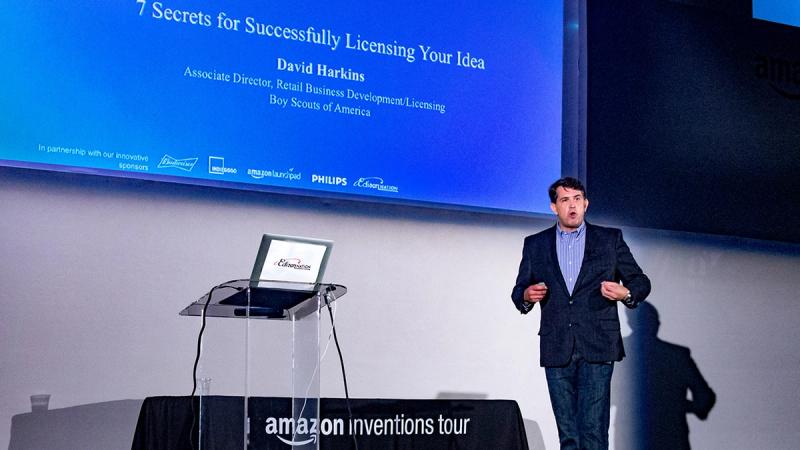
6 things that make me a better speaker
Public speaking is a great way for entrepreneurs to deepen their knowledge and build credibility. Here are 6 tips to consider for your next speaking opportunity.

Can long copy still make the cash register ring?
Long copy ruled direct response marketing, once. Marketers could create a brilliant story-driven copy to draw a reader in and then close the sale with a strong call to action. Does it still work?

How social media trust changed marketing
Social media has established an entirely different trust model than what we are used to with traditional media outlets. This new model is built on peer influence and not channel trust and it requires entrepreneurs to think differently about advertising and marketing.

Interview: Kim Stewart on Entrepreneurial Financing
In my interview with BB&T's Kim Stewart, she offers, among other things, that entrepreneurs seeking financing must be prepared with a business plan, knowledge of the industry, and distinctive competencies you might bring, and identify the risks and the steps that you are taking not only to mitigate those risks but also to mitigate the loss in the event the risks are realized.

It is Time to Think Differently about Entrepreneurship
The small number of established businesses started by Asian, African American, and Hispanic entrepreneurs, the declines in startup activity among those under 34 and limited startup activity by women are just a few of the challenges to America’s economic growth in the coming years. It is time to think differently about entrepreneurship.

How Angels Exit an Investment
Angel Investors are likely to want to know an entrepreneur’s exit plan from the beginning. While those exit plans may change as the business moves from its seed or start-up phases into something more mature, the entrepreneur who understands the need to formulate a positive (e.g., profitable) exit strategy from the beginning is likely to have greater interest and engagement from the investor. Considering this, let’s examine the more common positive strategies in which angel's exit investments...
The Angel Investor's Role
Angels with a depth and breadth of experience can be invaluable to a startup, especially if they have the desire and availability to be involved in the venture. Each angel will bring something different to the table. The challenge for entrepreneurs is to be open enough to listen and gain from the wisdom and insights the angel has to offer.Here are five typical ways an angel may participate in an entrepreneurial investment...
Negotiating with the Angel Investor
With Angel Investors, nearly everything is a matter of experience and style. Some will negotiate the terms of the deal, while others have a no-negotiation policy. Regardless of the investor’s preference, the goal is to find a mutually acceptable middle ground where both parties can win—or at least can see the upside to involvement in the deal. Anything less has the potential to poison the roots of the deal and potentially any fruit it may ultimately bear.
How Angels Structure Entrepreneurial Investment
Structuring refers to the form of equity the angel will receive for investment. Some angels do not give structure much thought in the early stages of investment, while others will see it as a highly important detail to be resolved. As with the other steps in investment consideration, each angel will bring his or her unique background and experiences to this step to determine the best structure for their investment needs. Here are three of the more common equity structures considered...
How Angels Value Entrepreneurial Investment
Valuation is how an investor estimates the future value of the venture and places a price on his or her possible stake in the company. Some argue the valuation stage is the only time in the investment process that angels indeed consider hard numbers; until this point, and perhaps afterward, many angels lean heavily on emotional and altruistic factors when making investment choices. If you have made it this far in the process, it is important to understand the various approaches an angel might take to valuing the entrepreneurial investment in your company.
How Angels Evaluate Entrepreneurial Investment
Early stage investing is a time-consuming process for an Angel investor. Every investor develops his or her own criteria to evaluate an entrepreneurial investment. For most, the opportunity must be a match for their interests, background, skills, and abilities. Still, there are some foundational basics. Here are five things an Angel investor is likely to consider...
How Angels Source Entrepreneurial Investment
Angel Investors have many steps in preparation for investment in entrepreneurial ventures. If you are an entrepreneur searching for early stage funding, it is helpful to consider how an Angel Investor may develop his or her deal flow. This knowledge will help you better identify possible qualified investors who might bring relevant experience to your business and prepare your venture to secure outside investment successfully.
How to hire a marketing agency
Too often entrepreneurs get in their own way when it comes to marketing. Marketing looks easy from the outside, but it is often a complex machine. When done well, a business can flourish; when done poorly, a company can crash and burn. Choosing the right marketing agency for your business can make all the difference. I should know. I have first-hand experience in both situations.
5 Tips for Young Entrepreneurs
Final Reflection on The Pursuit of Wow!
The Pursuit of Wow is uneven and sometimes inconsistent. Following Tom Peter’s thought process a bit of a challenge, but then, maybe that is the point.
Multiculturalism and Entrepreneurial Growth
Interview: Burgin Hardin on Intellectual Property and Entrepreneurship
Beating the Entrepreneurial Odds

Always be Pivoting
Pivoting creates an opportunity to refine and refocus the business on the customer's needs, values, and expectations. Entrepreneurs should always be listening for opportunities to improve, and yes, pivot, whenever necessary,
The importance of innovation for startup survival
Innovation: The key to entrepreneurial opportunity
In The Pursuit of Wow!
Seven Secrets to Licensing Your Idea
David Harkins shares his experience and insights on licensing your idea on the Amazon Inventions Tour in Atlanta, GA.
Change is inevitable
Everyone realizes change is constant and there is no rational choice but to embrace it, evolve with it, or at least find a way to adapt to the impact it has on our work. Embracing, evolving, or adapting is how most of us manage change in our personal lives, too. Although, we probably handle change in our business and professional lives much easier than we do in our person or home lives.
Time for a do-over
A "do-over" isn't necessarily about correcting a past mistake, as the words might imply. It's more about putting life on a different track or moving in a different direction. It's hard to do the latter if we see each day only as part of the big picture of life.
The Choice of Someday
The Inconvenience of Opportunity
So few of us ever realize the life we desire because perfect timing and circumstances are impossible to achieve. If we were to pay attention to our surroundings, we would see opportunities swirling all around, waiting to be plucked by a brave soul willing to take those risks that come with seizing an opportunity before the rest of the world is ready to acknowledge its existence.
A matter of perspective
Our approach to life also depends on perspective. For example, when the sunlight streams through our bedroom window early on a summer morning, we are either grateful to begin a new day, or aggravated because our sleep cycle has been interrupted too soon. Regardless of how we feel about it, the sun is still going to rise. Either we get up with a smile, or we grumble about hanging darker curtains before the next morning.
What do you chase?
How do you dream?
When we share our dreams with others we may hear, he’s a “big dreamer,” or she’s “dreaming big.” These designations are used interchangeably to question our abilities, but there is a subtle, yet critical, difference between the two. That difference is...

Stories we tell ourselves
We create these stories using an invisible process that influences what we see and hear. We unknowingly funnel our new experiences through filters that prejudge and influence our thinking about people, situations, and even our abilities. We tell ourselves, “They're wrong and I know it because…,”
A net will appear
Most of us are not afraid to leap when we believe it’s necessary to do so. The period of free falling we do while we are figuring out what we should do next is scary only because we do not know when, or if, a net will appear. What we fear, I think, is not the leap or the fall, but hitting the ground.
Fear is useless

Made in America: Still viable for apparel manufacturing?
Consumers may endure modest cost increases in American-made apparel, there is a not-yet-established point where the value of the “Made in America” selling proposition will be sufficient to sustain the price of the product at any level. Unfortunately, economic factors will undoubtedly force consumers to look for lower priced alternatives for one of life’s necessities, clothing.

7 tips for new entrepreneurs
You don’t want to make the mistake of discovering too late that you are not cut out to be your own boss. Doing so could make for days of hunger, the repossession of a car, or worse still, the loss of your home. So, if you are not willing to make these sacrifices and take these risks, you might be better off working for someone else. There’s no shame in working for others, though. We are all wired a little differently. We're all not cut out to be entrepreneurs.

Mister Rogers remixed for a new generation
Fred Rogers never forgot to explain the why. He knew that in order for a message to be heard and understood, it had to be delivered in a way that connected with its audience--old and new. Parents need to see the value in the message, but that same message must connect with the kids. Today's younger parents may not connect with Fred Rogers the way we Baby Boomers do, but they know his name. Yet, their children have likely had little exposure to Mister Rogers' message, his sneakers, or that trademark sweater.

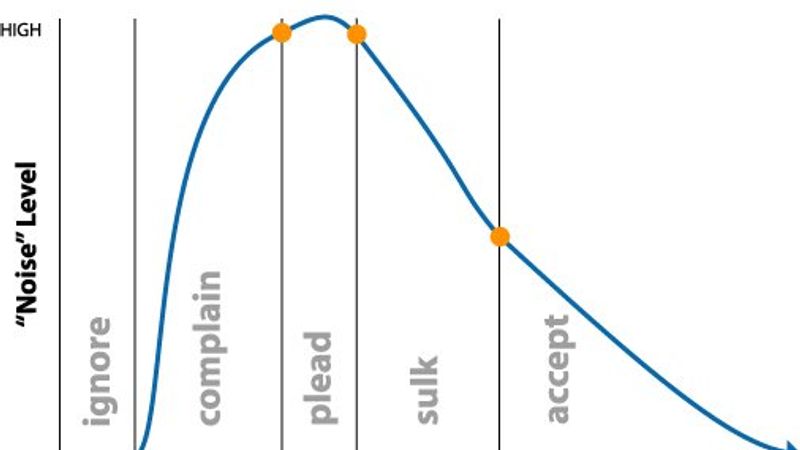
The stages of change resistance and acceptance
Change rarely meets us with open arms. At first, it barely registers. Then it irritates. Then it unsettles. The emotional arc of change often mirrors the stages we experience in loss -- denial, frustration, bargaining, and eventual acceptance. Change triggers similar emotional dynamics in individuals and organizations, and the real leverage point may not be stopping change, but shortening the distance to acceptance.
You cannot control your brand
A company can only control its intention, its action and its reaction. If you think about it, this is only about 1/4 of a brand's value when it plays out in daily interactions between the customer and the company. The customer controls the remaining 3/4 of the brand's value based on their perceptions of how the company delivers, whether it be product quality, service and fit with the customers needs, values and expectations.

Nonprofits have a mission connection problem
Many nonprofits don’t lose their mission because they stop caring. They lose it because systems of funding, accountability, and coordination quietly reshape everyday decisions. This essay explores why mission drift is a systems problem, not a values failure.
Don't be afraid of the storms
Storming is a necessary part of life. It helps us to confront the issues and overcome the conflicts that prevent us from achieving greater successes. We must not be afraid to Storm, however uncomfortable it may be for us. Storming is especially critical when it serves to move projects or ideas forward, or supports growth in our personal lives. Refusing to Storm never allows us to be the best we can be, as an individual or as a member of team.
Will you make a public stand in life?
It seems to me that understanding just one more thing about someone we work with or someone we love makes all the difference in how we can relate to them. This new understanding becomes a gift because, it not only changes our lives; it changes theirs.
Residual Customer Value Calculator
The Residual Customer Value Calculator helps to estimate the value a single customer for your company over his/her lifetime. Test it out!
How to measure social media
There is much talk in marketing circles about how to measure the impact of social media. Some measurements are hard, such as actual campaign response and conversion rate measures. Others are a bit softer, such as measuring campaign reaction frequency and tone (e.g., positive, neutral, negative). While both are valid measures, I do think we have been missing a broader, yet critical component of our measures—the overall financial impact of word-of-mouth (WOM) spread.
Why we need social media
We need social media tools to help us maintain our ability to be human in the face of the demands made on us by our culture, our peers, and ourselves. These tools are now such an essential part of how we function as individuals and who we are together as a community, that living without social media and supporting technologies is unthinkable.
Digital is not a channel; it’s a life-connection tool.
Life is no longer exclusively defined by what is happening in our physical presence. For many of us it resides in the palm of our hands and is illuminated by a tiny screen. Social media and digital technologies are only tools to help spread the message. What is most important for marketers to remember is simply: great stories and memorable experiences spread quickly to build brands.
Social Media: This, too, will change.
I am certain of two things, though. One: Everything about technology and social media interaction will continue to evolve. For those of us who are early adopters, we gain great insights into how that evolution may occur. Two: My friends, who don’t understand Twitter today, won’t understand the next step in the evolution either. Unfortunately, they will find themselves farther and farther behind; not just with technology, but also in their social interactions with others as many of their friends more readily adopt the changing way we communicate as a culture.
Are your customers loyal or lazy?
From an organization’s perspective, a customer relationship is all too often built only on revenue generated. Specifically, the value of that relationship is measured on the number of purchases made and the size of those purchases. When a customer recognizes that their loyalty is measured only by these factors, such as with supermarket loyalty programs, they become fickle about the relationship. Laziness creeps in and whoever has the best sale prices or is closest to home gains the customer’s favor. When this happens, the relationship becomes a commodity for the customer, as it is already for the organization.
Millennials: The rise of a new “Hero”
As the Millennials move into adulthood, they are merging their needs, values, and expectations into every detail of their lives. They need to feel that they are making a difference. They value consensus, relationships, and family. They hold the government, institutions, corporations, their peers, society, and themselves to higher standards than any other generation. Along the way, their idealism is resetting the expectations not just for their own generation, but also for all.
People are talking. Are you listening?
Social media tools help level the playing field for organizations that are "hearing impaired." It’s like having a pair of super-charged, digital hearing aids that help you amplify just those frequencies you need to hear. This ability to listen, hear and actively engage in conversations 24/7 allow your organization unbelievable opportunities to learn from your customers, correct your mistakes, and build a loyal following.

Twitter and the curse of non-interested followers
Social media tools are specifically designed to build conversations. Think about it like talking with your neighbor across the back fence, only you're talking across Internet. Shared ideas and interests are paramount to building personal credibility and friendships. Twitter and other online tools can accelerate credibility building, but they can destroy it just as quickly.
A radical’s approach to change and innovation
To drive change and innovation within your organization, you must find the radicals who strive to make a difference. Then turn them loose to do what they do best—stir things up.
Disruption: Finding the edges through force
Disruption forces us out of our comfort zone and to the edges of our businesses where we discover new opportunities to serve untapped markets. In some cases, we create markets where none exist. We find things we never dreamed about or thought possible before someone “drops the bomb,” forces us out, and makes us look back on what has happened. Like it or not, we need disruption to facilitate change and force us to the next level--whatever that may hold for us.

Change begins with you
America didn’t change today. Our expectations did. A reminder that change starts with you, when you stop fearing change and start choosing it.

The last thing you hear
When we made a small change to the last prompt recently, we noticed a 100% increase in the number of misdirected callers who hit the last prompt--the one before, "If you need to hear these options again, press the number or pound sign." Most told us they just punched the last prompt they heard, but 99% of those misdirected callers should have chosen the first prompt they heard. I suppose one way of looking at this is that they customer was interested enough to listen to all the prompts before deciding. I think what truly happens is customers are waiting for a better "fit" with their needs and are responding to the last thing that they hear because they can't remember what came before. You do this, don't you? I certainly do. We are always looking for something that better meets our needs, so we filter information that we don't believe is relevant at this moment. We say to ourselves, "I don't need that now. I'll look for it again, when I do need it." Things you don't need never make your radar; the last thing you hear always does--even if it's not what you need at the time.
The destination might be the same, but the journey is not.
In recent months, I have encountered a number of people who are new to their jobs. They've come from outside the organization for which they now work and they were hired in part because of the good work they had done with their former companies. No doubt, they were told when they were hired something like, "What we're doing isn't working, we need you to fix it." The new organization has handed each the keys to the car and is relying on past navigational experiences of this new “driver” to get the firm to a new destination. Unfortunately for the driver, the map he posses is now outdated; there are roadblocks and detours all around. The destination may be the same, but the road has changed and so have the people in the carpool. This will be a very different trip. As an experienced change agent, I can offer one simple piece of advice...

It's all in the tone of your voice
Growing up, I learned quickly how to determine when my dad wanted my attention. He could add a certain tonal quality to his voice, let's say, to the delivery of a sentence that let me know I needed to focus on what he was saying. He never raised his voice, but I often heard him "yelling" when he used "the tone.” On the other hand, my mom's voice often had a constant level of exasperation that allowed me to lose every word she shared to the white noise that surrounded us. I thought about "the tone" as I watched President-elect Barack Obama's acceptance speech last evening. His entire campaign was delivered with a different tone...
Trust is still the currency
Although the perceptions, behaviors, interactions are somewhat different between the generations, the act of sharing information and building relationships (face-to-face or online) is tied to one single factor: Trust. Trust is what makes the relationships work. Trust is the only thing that can make or break that relationship. It does not matter if it's a personal, friendly relationship, or one build on expectations of your company or your brand.
Looking through the wrong end of the telescope
Many organizations have become so rooted in their past that they have put their entire future at risk to preserve their own traditions and corporate cultures. They persist in developing marketing and product plans based on what is now an outdated idea of what was prevailing thinking at some tiny point in their history. There is no faster way to kill a brand than to think about future opportunities looking through the wrong end of the telescope.
If innovation is a good idea, it's worth doing poorly.
Successful marketers today understand that we must keep our eyes open and our ears tuned-in to all that happens around us today. Yesterday is irrelevant in today's culture. We must be bold enough to take action on what little we know, or think we know, and connect the seemingly-unconnected patterns in daily living to find opportunity for innovation.
I like change, except...
Perhaps most important to me in this experience was learning, first-hand, that people have to want to change and buy-in to the benefits the change will bring. Change can't be forced upon them. Human beings like to have some sense of control and often change processes,
Are you making promises you can't keep?
A relationship with a customer is based on trust-trust that's built on a series of promises that a company has kept. Break a big promise and you're immediately history. But what happens when you break a small promise? How many customers have you lost due to broken promises brought upon by the actions of one or two individuals? I would suggest you will never know, if you're breaking the small promises. These customers aren't going to complain, they're just going to gradually slip away to your competitors. You'll never know what promises you've broken or how often you've broken them, so repairing the relationship will be difficult, if not impossible.

Supermarket loyalty?
First of all, nearly every supermarket offers the programs with price-off incentives. In other words, have the card, get a special price. Where's the loyalty in that? Many people (including those in my immediate family) have cards to all the local supermarkets and take advantage of the special pricing on key merchandise at all of the stores. Again, where's the loyalty?

The trouble with cellphones
In my travels lately, I've come to notice that people will use their cellphones anywhere to talk about anything. I've been privy to conversations about lawsuits, financial difficulties, and marital disputes, all thrown out in the open for any wandering ear to hear. It's not that I'm trying to listen. I try to tune out other conversations, but it's almost as if my ears (and I'm sure those of others) automatically tune in on words or phrases like, "lawsuit", "...divorcing him", "caught her in bed with..." or "I'm filing for bankruptcy". I'm not trying to be nosy, my ears just can't help themselves.
How to keep your job in marketing
In most organizations these days--regardless of if you’re selling to consumers or to businesses--marketing’s primary job is to support new sales in an anxious push for increased revenue. Certainly, driving new sales can generate new revenue. However, blindly focusing on acquisition can wreak havoc on an unprepared organization in terms of insufficient capacity to handle front-line sales or merchandising, sales fulfillment, customer service or technical support. Worst of all, with the organization concentrating on bringing in new customers in the front door, no one is watching the back door as existing customers stroll out. We would all agree, I think, that watching the back door is perhaps more important for long-term business success.
Overcome CRM Challanges: Address People, Process, and Technology
Organizations are often their own worst enemy when it comes to implementing a CRM strategy. In some organizations, the culture and processes are so ingrained that it is difficult to facilitate change, even if you have effectively addressed issues of technology and human behavior. Moreover, the mindset that permeates the organization's processes is often based on limitations of technology in place at the time a specific process or procedure was developed. What has been done in the past may no longer be the best guide for what to do in the future. Organizations must prove themselves adaptable with processes and procedures that are designed with the customer in mind.

Playing Games with Wireless Advertising
I couldn't imagine anyone sitting around playing games on their cell phones while killing time. I then remembered that the day prior I was sitting in the airport waiting to pick up a friend and found myself-for the first time-playing a game on my cell phone. The difference is that my game is loaded on the phone and doesn't cost anything to play. To take advantage of these other games or entertainment, it requires a connection to a server and that means I'm paying for the call and the data transfer. Call me cheap-make that "frugal"-but, I'd never do it as long as the wireless pricing models are as they are today. That does not mean, however, that others won't.

Preparing for trouble with CRM
A strong CRM vision is critical because it helps ensure that the decisions made in selecting technology will be made on the basis of the goals of the company and not be driven-or limited-by the functionality or capability that a particular software application may provide. Remember that technology should support the vision of CRM, not drive it. Best practices suggest that the way to ensure success with CRM is to...

Information you need, exactly when you need it
For marketers, this technology, like many others can improve value to customers by providing such services as updates on order status, access to purchase history, and current sales promotions. However, what's different, and perhaps most intriguing about this technology its ability for dynamic interaction. Unlike most wireless content that's pushed from a business server to a user, this technology allows content to be pulled based on a user's request-enabling information to be provided both on demand, and with personal relevancy. Let us look at a couple of examples of how this might work...
The Trouble with CRM Systems: Tomorrow’s forecast - Sunny with some early fog.
When CRM began to evolve in the mid-90's every software vendor who had an application that had anything to do with managing customer or prospect data began pitching itself as a "CRM System". Many of these systems were built to address one particular aspect of CRM, such as Sales Force Automation (contact management, Campaign Management, or Customer Analytics, and could not possibly deliver the value promised as "CRM System". It was a case of "over-promise and under-deliver". Unfortunately, there were no end-to-end technology solutions for CRM at the time, and today, there still aren't (although we're getting closer). As much as vendors collaborate with one-another to provide an "integrated solution," the results have been less than stellar. One only needs to read the Wall Street Journal or any number of business and trade publications to learn about the failures of CRM System implementation where multi-system integration is involved.
The Trouble with CRM Systems: It's always darkest before the dawn
In the last four years, billions of dollars have been spent on CRM technology that doesn't live up to its promise. A Gartner study suggests that nearly 60% of managers will view their CRM initiatives as failures. Organizations are wise to be skeptical of CRM system capabilities, but they themselves are as much to blame as the system vendors. Many of the organizations that have failed with CRM because they did not conduct appropriate cost-benefit-analyses, reevaluate processes, procedures, and organizational structure, or fully-develop CRM as a business strategy. Instead, they invested only in the technology, because as one manger said to me, "This software will solve all of our problems." It didn't, and it won't. At least not without addressing all of the other issues.

Reaching the Right Person at the Right Time
One of the golden rules of successful marketing, as you well know, is the ability to deliver the "right" message to the "right" customer (or potential customer) at the "right" time. The CRM movement has managed a credible job helping us all to pull together the "right" message for the "right" customer, but we yet to be able to deliver that message at the "right" time. In other words, we still have difficulty in getting a message to the customer when s/he is predisposed to buying.

Organizational Process, Behavior, and Technology are Equally Critical for CRM Success
Adopting a customer-centered marketing strategy sounds simple. Focusing on the customers’ needs, values, and expectations and subsequently providing value for the customers is a goal to which many companies aspire. But too few deliver.
Newsletter
Human Equation on Substack
Some of my writing appears first on Substack. If you want to think alongside me regularly, the newsletter is the best place to start.